Hawk tuah girl cryptocurrency
However, these SHIB investors are a strong and significant community that has achieved a lot in a short time. Movements have their own value, and this sense of community, itself, offers an investment thesis to many https://casino-review-au.org/10-gringos/.
Shiba Inu is an Ethereum-based altcoin (a cryptocurrency other than Bitcoin) that features the Shiba Inu—a Japanese breed of hunting dog—as its mascot. Shiba Inu is widely considered to be an alternative to Dogecoin; in fact, proponents of Shiba Inu have touted it in the past as “the Dogecoin killer.”
After months of sideways trading, SHIB rose sharply on Oct. 2, 2021, from $0.00000766 to $0.00002913 by Oct. 13. Two weeks later, SHIB recorded its current all-time high of $0.000089 on Oct. 28, although the market has since corrected again.
Cryptocurrency
On 10 June 2021, the Basel Committee on Banking Supervision proposed that banks that held cryptocurrency assets must set aside capital to cover all potential losses. For instance, if a bank were to hold bitcoin worth $2 billion, it would be required to set aside enough capital to cover the entire $2 billion. This is a more extreme standard than banks are usually held to when it comes to other assets. However, this is a proposal and not a regulation.
Properties of cryptocurrencies gave them popularity in applications such as a safe haven in banking crises and means of payment, which also led to the cryptocurrency use in controversial settings in the form of online black markets, such as Silk Road. The original Silk Road was shut down in October 2013 and there have been two more versions in use since then. In the year following the initial shutdown of Silk Road, the number of prominent dark markets increased from four to twelve, while the amount of drug listings increased from 18,000 to 32,000.
For Ethereum, transaction fees differ by computational complexity, bandwidth use, and storage needs, while bitcoin transaction fees differ by transaction size and whether the transaction uses SegWit. In February 2023, the median transaction fee for Ether corresponded to $2.2845, while for bitcoin it corresponded to $0.659.
According to PricewaterhouseCoopers, four of the 10 biggest proposed initial coin offerings have used Switzerland as a base, where they are frequently registered as non-profit foundations. The Swiss regulatory agency FINMA stated that it would take a “balanced approach” to ICO projects and would allow “legitimate innovators to navigate the regulatory landscape and so launch their projects in a way consistent with national laws protecting investors and the integrity of the financial system.” In response to numerous requests by industry representatives, a legislative ICO working group began to issue legal guidelines in 2018, which are intended to remove uncertainty from cryptocurrency offerings and to establish sustainable business practices.
An initial coin offering (ICO) is a controversial means of raising funds for a new cryptocurrency venture. An ICO may be used by startups with the intention of avoiding regulation. However, securities regulators in many jurisdictions, including in the U.S. and Canada, have indicated that if a coin or token is an “investment contract” (e.g., under the Howey test, i.e., an investment of money with a reasonable expectation of profit based significantly on the entrepreneurial or managerial efforts of others), it is a security and is subject to securities regulation. In an ICO campaign, a percentage of the cryptocurrency (usually in the form of “tokens”) is sold to early backers of the project in exchange for legal tender or other cryptocurrencies, often bitcoin or Ether.
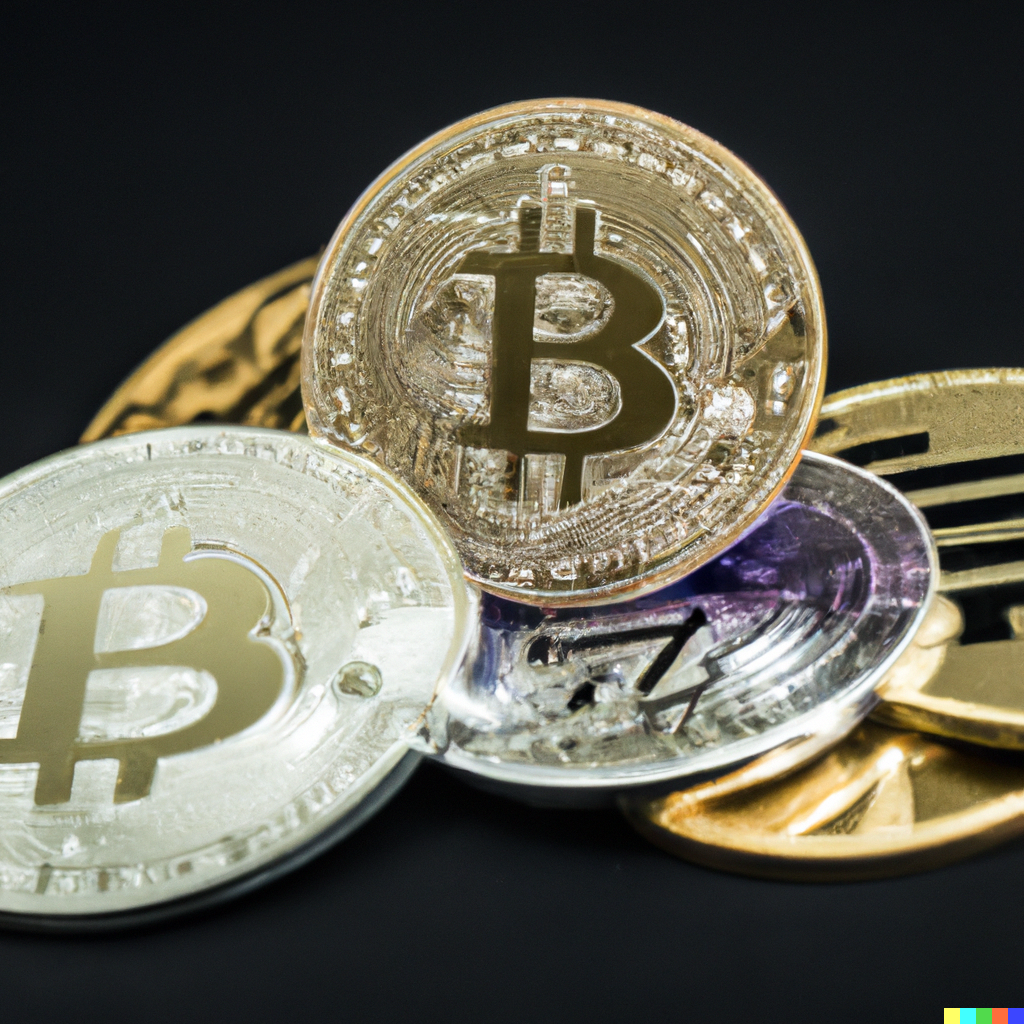
Pi network cryptocurrency
At its peak, Pi Coin hit $2.90, but concerns over regulatory issues (thanks to its referral-based model) and criticism from crypto leaders — like the Bybit CEO calling it a scam — have kept the project under the spotlight for the wrong reasons. The Pi team, though, has consistently denied those accusations.
Some critics say this isn’t “real” mining but more of a way to give out tokens and build a crowd. The Pi you earn is often seen as a placeholder that becomes real once it’s moved to the Mainnet. There’s a ceiling of 100 billion Pi tokens (65% for community mining, 20% for the Core Team, 10% for a foundation, 5% for trading). They also have a “halving” system to slow down how many new Pi are made, controlling inflation. The amount of Pi you can actually use goes up as more people pass KYC and transfer their Pi to the Mainnet.
Those who back Pi point to its huge, active community, the founders’ backgrounds, its goal of being inclusive, and its careful, step-by-step approach to building an ecosystem focused on real uses. They see the Open Mainnet launch as a major move that could clear up many of these old worries.
Pi Network follows a one-account-per-person policy through its Know Your Customer (KYC) solution. This system combines machine automation and human verification to authenticate user identities while preserving privacy. The KYC process emphasizes real individuals, combats fraudulent activities and enables fair participation in the mining process of the network. Pi’s identity verification approach balances scalability, security, and accessibility, allowing millions of users worldwide to validate their accounts while maintaining regulatory compliance.


